
Chemical drain cleaners can clear a clog quickly, but they can also damage your plumbing. Strong acids and alkalis can generate heat, affect pipe materials, and create problems when used incorrectly or repeatedly. This can be especially concerning in older Long Island homes with aging cast iron plumbing.
If you have a slow or clogged drain, understanding these risks can help you choose a safer solution. Here is what you need to know about chemical drain cleaners, cast iron pipe care, and safer ways to unclog a drain.
Why Are Chemical Drain Cleaners Dangerous For Pipes?
Chemical drain cleaners can be dangerous for pipes because some contain highly corrosive acids or alkalis that dissolve organic material through chemical reactions that can generate substantial heat. While this may break down hair, grease, or other debris, it does not necessarily address the underlying plumbing problem.
Some products contain ingredients such as sodium hydroxide or sulfuric acid. These chemicals can be harsh on certain plumbing materials, particularly when overused or used in plumbing that is already deteriorating.
If the drain remains blocked, corrosive liquid can stay inside the pipe while you attempt another treatment or remove the obstruction. The key question is not simply whether a chemical cleaner can open your drain, but what it may do to the pipe behind the clog.
How Chemical Drain Cleaners Affect Different Pipe Materials
Potential damage depends on your plumbing material, age, and condition. Long Island homes can contain both older and newer plumbing, so you should not assume every drain can safely tolerate the same treatment.
Cast Iron Pipes
Older cast iron plumbing deserves particular attention. Cast iron is durable, but it can develop corrosion and gradually lose structural strength as it deteriorates.
If a pipe already has corrosion, thinning, or weakened sections, repeated exposure to aggressive chemicals can add another source of stress. A drain that repeatedly needs chemical treatment may be signaling a larger plumbing problem.
Good cast iron pipe care starts with identifying the cause of recurring blockages instead of repeatedly treating the symptom.
PVC And Other Plastic Pipes
PVC is resistant to many chemicals, but that does not mean every drain cleaner is harmless to every plastic plumbing system. Concentrated chemicals, high temperatures, prolonged exposure, or incompatible products can create problems.
Pipe joints, seals, and fittings may also react differently from the pipe itself.
Older Or Deteriorating Plumbing
The condition of your plumbing matters as much as the material. Repeated chemical treatment in an older line that is already corroded, partially collapsed, or heavily restricted can create additional concerns.
If a drain repeatedly slows down after chemical treatment, investigate why the blockage keeps returning.

Why Chemical Reactions Can Make A Clog Even More Dangerous
Many chemical drain cleaners work by reacting with the material blocking the pipe. Depending on the product, that reaction can produce heat while breaking down organic material.
If the clog does not clear completely, concentrated chemicals may remain in the drain. Mixing different drain cleaners is even more dangerous because incompatible ingredients can create unexpected reactions, including hazardous fumes or excessive heat.
If you have already poured a chemical cleaner into a blocked drain, tell a plumber exactly what product you used before work begins. Do not assume the product has disappeared because some water eventually moves through the drain.
What Are Safe Ways To Unclog A Drain?
For a minor, isolated slow drain, start with a mechanical method rather than a corrosive chemical product.
Some safer ways to unclog a drain include:
- Use a plunger to loosen simple blockages with pressure
- Try a drain snake to mechanically break up or retrieve an obstruction
- Remove visible debris from the drain opening when accessible
- Use appropriate hot water when compatible with the plumbing and blockage
- Call for professional drain clearing when the clog persists or affects multiple fixtures
The right method depends on what is blocking the pipe. Hair, grease, mineral buildup, roots, and damaged sewer lines require different solutions.
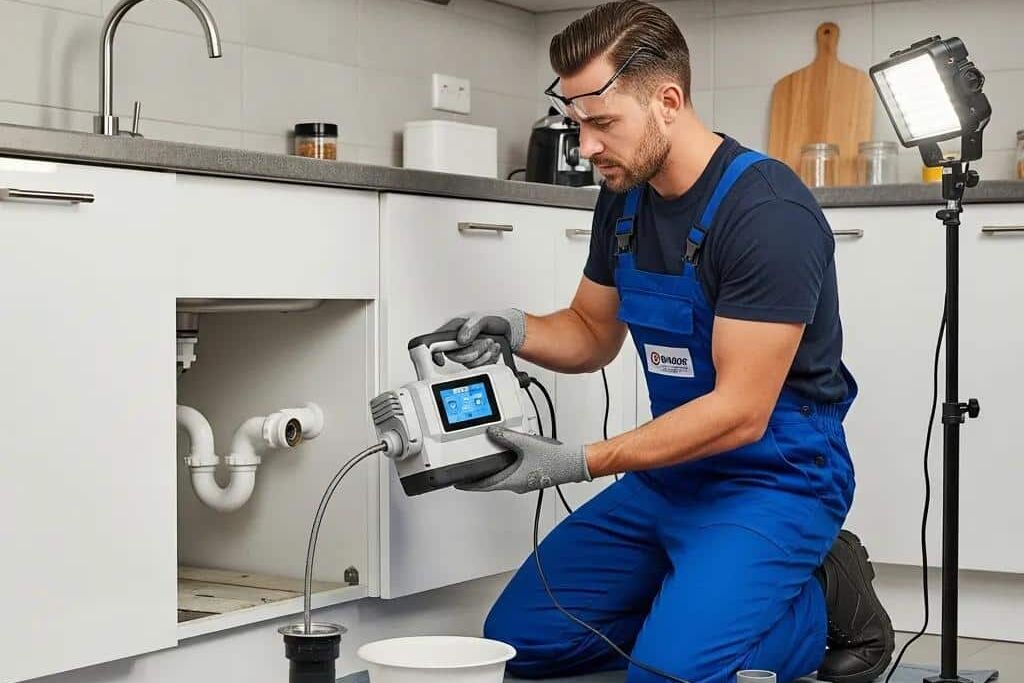
Professional drain service can determine whether the blockage is limited to one fixture or connected to a larger drainage problem. A professional drain cleaning service can be appropriate when basic methods are not resolving the issue.
When Should You Stop Trying DIY Drain Clearing?
DIY drain clearing can make sense for a minor clog that responds to a plunger or simple mechanical method. You may not need professional service every time water drains slowly.
The situation changes when the same drain keeps clogging, several fixtures drain slowly, wastewater backs up, or you hear gurgling. These symptoms can indicate a deeper obstruction or a problem farther along the drain or sewer line.
You should also be cautious if you have an older home and are unsure what type of plumbing is installed. Repeated chemical treatments are not a substitute for determining whether an aging pipe is corroded, restricted, cracked, or otherwise compromised.
If you have already used a chemical cleaner and the drain remains blocked, do not add another product. Professional diagnosis is safer than repeatedly introducing chemicals into the line.

What About Chemical Cleaners And Long Island Cesspools?
If your Long Island home uses a cesspool or other onsite wastewater system, what you put down the drain matters beyond your indoor plumbing.
Strong chemicals can interfere with biological processes involved in wastewater treatment and travel through your plumbing into an onsite wastewater system.
For homes that rely on onsite wastewater treatment, chemical drain cleaners are a poor routine solution. If you have a cesspool and recurring drain problems, address the blockage rather than repeatedly flushing chemicals into the system.
For homeowners in Suffolk County, protecting the entire wastewater system should be part of your drain maintenance strategy.
How Much Does Professional Drain Clearing Cost?
There is no reliable single price for professional drain clearing because the cost depends on the location and severity of the blockage and the equipment or diagnostic work required.
A simple fixture-level clog can require a different approach from a main drain obstruction, recurring sewer blockage, or suspected pipe damage.
Before approving work, ask what is included, how the blockage will be diagnosed, whether additional equipment may be necessary, and whether you will receive pricing before non-emergency work begins.
For recurring problems, paying to identify the cause can be more useful than repeatedly paying for temporary clearing.
Common Mistakes to Avoid
Small decisions can turn a simple drain problem into a more complicated plumbing repair.
- Repeatedly using chemical cleaners: Repeated exposure can increase risks to vulnerable plumbing and does not resolve recurring blockages; use mechanical clearing or professional diagnosis instead
- Mixing different drain products: Different chemicals can react unpredictably and create dangerous heat or fumes; never combine drain cleaners
- Ignoring recurring clogs: A drain that repeatedly slows down may have an underlying obstruction or damaged pipe; have the problem evaluated
- Using chemicals in a cesspool system: Strong chemicals can interfere with wastewater treatment; avoid sending drain cleaners into onsite wastewater systems
- Ignoring product instructions: Drain cleaners differ in ingredients and warnings; always follow the manufacturer’s instructions
Frequently Asked Questions
Are Chemical Drain Cleaners Bad For Cast Iron Pipes?
Chemical drain cleaners can pose a greater concern when cast iron plumbing is already corroded or deteriorating. Cast iron can develop internal corrosion over time, reducing the pipe’s effective opening and structural integrity. If your home has older cast iron drains and recurring clogs, diagnosis is preferable to repeated chemical treatment.
What Is The Safest Way To Unclog A Drain?
For a minor clog, a plunger or appropriately sized drain snake is generally a better starting point than a corrosive chemical cleaner. If the blockage does not respond, keeps returning, or affects multiple fixtures, professional drain clearing can identify whether the problem is deeper in the plumbing system.
Can Drain Cleaner Damage PVC Pipes?
PVC is resistant to many chemicals, but that does not make every drain cleaner universally safe. Product concentration, temperature, exposure time, fittings, seals, and the condition of the system all matter. Always follow the product label and avoid using multiple chemical products together.
Can Chemical Drain Cleaners Damage A Cesspool?
Yes. Chemical drain cleaners can introduce strong acids or alkalis into an onsite wastewater system. These chemicals may interfere with microorganisms involved in wastewater treatment and potentially affect the system and surrounding environment. If your home uses a cesspool, avoid chemical drain cleaners as a routine clog solution.
Should You Use Drain Cleaner If A Drain Is Completely Clogged?
A completely blocked drain is a poor situation for repeated chemical treatments. The product may remain trapped behind the obstruction, creating a safety concern if you later plunge, snake, or open the line. If a severe clog will not clear with basic mechanical methods, professional service is a safer next step.
Why Does My Drain Keep Clogging After Using A Drain Cleaner?
A recurring clog often means the chemical cleaner has treated the symptom without removing the underlying cause. Buildup, roots, a damaged pipe, or a restriction farther down the line can continue causing problems. Recurring clogs should be evaluated rather than treated with increasingly frequent applications of drain cleaner.
Call All Island HVAC For Safe, Professional Drain Clearing
If you are concerned that chemical drain cleaners are dangerous for pipes, your next step should be determining what is restricting your drain rather than repeatedly treating the symptom.
At All Island Plumbing, Heating & Cooling, we provide professional drain cleaning and plumbing services throughout Nassau and Suffolk County. Our licensed and insured technicians focus on practical solutions, upfront pricing, and the right approach for your plumbing system.
Whether you are dealing with a stubborn clog, recurring drainage problems, or an urgent backup, our team is available 24/7 to help restore reliable drainage. Call All Island for Safe, Professional Drain Clearing


