Trusted Local Plumbers Serving Nassau County
Pipe installation covers the planning, material selection, and installation of water, sewer, and gas piping so homes and businesses get safe, code-compliant service. Local plumbers familiar with Nassau County know the permit process, the freeze risks that affect buried lines, and which materials hold up best in local soils and water. That local knowledge reduces failures and long-term costs. This guide walks homeowners and contractors through what to expect for pipe work in Nassau County: common service categories, material and method tradeoffs, emergency repair steps, gas-line safety, new-construction coordination, and repiping best practices. You’ll learn how installations are planned and executed, how to spot urgent problems, and the pros and cons of copper, PEX, trenchless techniques, and traditional excavation. Practical checklists, comparison tables, and emergency action steps are included to help you prepare for permitting, inspections, and hiring licensed contractors in Nassau County.
Why Choose Local Nassau County Plumbers for Your Pipe Installation Needs?
Local Nassau County plumbers bring three clear advantages: familiarity with county permitting and inspections, faster response for emergencies, and hands-on experience with regional conditions that affect piping. They know typical inspection timelines, common soil or utility issues, and local utility coordination practices—facts that cut delays and rework during installation. Hiring nearby professionals also makes it easier to coordinate with municipal inspectors and other utilities when work is underway. The paragraph above explains why locality matters and leads homeowners to nearby licensed teams for fast, compliant service.
All Island Plumbing, Heating & Cooling is a locally mapped provider on Google Business Profile serving Nassau and Suffolk counties with licensed, insured technicians. We offer Pipe Repair & Replacement and 24/7 emergency service. Our local presence helps speed assessments and align work with county inspection requirements, which can shorten project timelines and minimize disruption. Below are concise reasons to consider a local provider.
- Licensed, insured technicians who install and repair to current safety standards.
- 24/7 emergency service to respond to burst pipes, major leaks, and sewer backups.
- Pipe Repair & Replacement offerings that include temporary stabilization and permanent fixes.
- Local coverage in Nassau and neighboring Suffolk County to simplify inspection coordination.
Picking a nearby licensed team reduces logistical friction during permit reviews and inspections—important when schedules are tight or when emergency stabilization is required before a permanent fix.
What Makes All Island Plumbing the Trusted Choice in Nassau County?
All Island Plumbing, Heating & Cooling focuses on the pipe installation and emergency plumbing needs Nassau County homeowners face: Pipe Repair & Replacement, plus 24/7 emergency response across Nassau and into Suffolk. Our Google Business Profile lists us as a local plumbing and HVAC provider, and our crew is licensed and insured with emergency availability. That local footprint makes it easy for homeowners to confirm our presence and read customer feedback on local listings.
- Service focus: Pipe Repair & Replacement and 24/7 emergency plumbing.
- Coverage: Nassau County and Suffolk County service areas.
- Staff: Licensed, insured technicians offering on-site assessments.
- Presence: Local business profile and mapped service area for easier scheduling.
These attributes line up with homeowner priorities—safety, permit compliance, and fast emergency response—showing how licensed plumbers deliver quality, code-compliant installations.
How Do Licensed Plumbers Ensure Quality and Safety in Pipe Installation?
Licensed plumbers follow permit and inspection workflows, use code-approved installation methods, and run standardized tests to verify water-tight, pressure-rated systems. Typical quality steps include a pre-installation assessment, permit submission and approval, installation with certified materials, pressure and leak testing, and documentation for inspectors and property records. Common verification tools are pressure tests, tracer or dye checks, and camera inspections for sewer lines to confirm integrity before backfill and final sign-off. These steps reduce hidden failures and support long-term reliability.
Licensed installers also maintain records and warranties that simplify insurance claims and future maintenance planning. Their adherence to code lowers liability for property owners. With that verification process understood, homeowners can better evaluate the specific installation types they may need in Nassau County.
What Types of Pipe Installation Services Are Available in Nassau County?
Plumbers in Nassau County commonly provide five core pipe services: water line installation and service-line replacement, sewer line installation and repair (including trenchless options), gas line installation and safety work, new-construction rough-in plumbing, and whole-house or partial repiping. Each category has its own permitting, excavation, and testing steps—for example, water and sewer work usually requires municipal coordination and inspection before backfill, while gas work requires tight leak testing and inspection before re-commissioning. Knowing these categories helps property owners pick contractors with the right experience and equipment for the job. Below is a short list defining each service.
- Water line installation: Replacing or installing supply pipes from the main/service line to the meter and house connection.
- Sewer line installation: Installing or replacing drain and sewer mains using excavation or trenchless methods.
- Gas line installation: Routing and connecting fuel gas lines with required safety testing and code compliance.
- New-construction plumbing: Rough-in piping layout and conduit work coordinated with builders and inspectors.
- Repiping services: Partial or whole-house replacement of aging or failed plumbing systems.
These service categories frame the material and method choices homeowners face; the next section explains the standard water-line workflow and the material tradeoffs to consider.
Choosing the right pipe material affects lifespan, cost, and suitability for Nassau County conditions—freeze exposure and local water chemistry among them. The table below compares common pipe materials used for water service in our area.
| Pipe Material | Typical Lifespan | Cost Range | Pros / Cons |
|---|---|---|---|
| Copper | 50+ years | Moderate to High | Durable and corrosion-resistant; higher material and labor cost, requires soldering |
| PEX | 30–50 years | Low to Moderate | Flexible, often faster to install and more freeze-tolerant in many layouts; sensitive to prolonged UV exposure |
| PVC (water/drain) | 25–50 years | Low | Corrosion-resistant for drains; not always suitable for hot-water service |
| Galvanized (older systems) | 20–40 years | Low (legacy) | Prone to corrosion and buildup; frequently recommended for replacement |
How Is Water Line Installation Performed by Nassau County Plumbers?
Water-line work starts with a site assessment and utility locate, then permit procurement and material selection based on service pressure, soil conditions, and code. Installers will trench or use trenchless insertion, set pipes on proper bedding, protect exposed sections, and run pressure and bacteriological tests before backfill and meter reconnection. Choosing copper or PEX changes installation steps: copper needs soldering and more fittings, while PEX’s flexibility can reduce fittings and sometimes excavation. Proper testing and documentation prepare the job for municipal inspection and help avoid rework.
How Can Emergency Pipe Repair Services Help Nassau County Homeowners?
Emergency pipe repair covers sudden failures—burst pipes, major leaks, and sewer backups—by providing immediate mitigation, temporary stabilization, and a fast path to full repair or replacement. Emergency crews perform rapid triage, isolate and shut off affected lines, implement temporary fixes to limit water or sewage damage, and coordinate with insurers and inspectors for permanent solutions. Fast response limits structural and mold damage and often reduces overall repair costs compared with delays. The list below outlines homeowner actions and how emergency teams prioritize damage control.
- Shut off the main water or gas supply if it’s safe and you can access the valve to stop active flooding or leakage.
- Evacuate areas with standing water or contamination and move valuables away from affected zones.
- Call an emergency plumbing provider for immediate assessment and document damage for insurance.
- Follow on-site technician directions for temporary mitigation until permanent repairs are scheduled.
Those steps are the immediate actions homeowners should take; the table that follows clarifies common emergency scenarios and typical responses.
| Emergency Scenario | Immediate Steps | Typical Response & Fix |
|---|---|---|
| Burst pipe | Shut off main, contain water, call emergency service | Isolate line, apply temporary clamp or bypass, schedule permanent replacement |
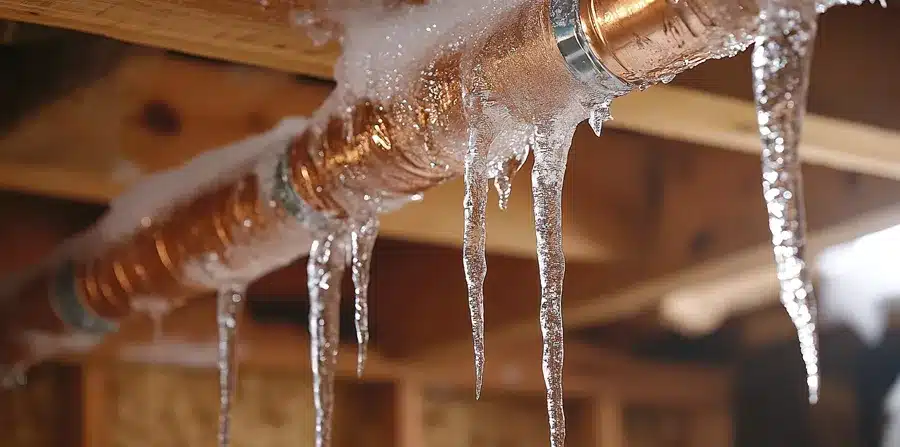
| Frozen burst pipe | Isolate, gently thaw if safe, call a professional | Repair the burst section, add insulation or reroute to reduce recurrence |
| Slab leak | Minimize water use, call a plumber, document signs | Use leak detection, access slab locally or apply trenchless fixes, seal and repair permanently |
| Sewer backup | Avoid contact, shut off fixtures, call an emergency plumber | Pump and sanitize affected areas, locate blockage, repair with trenchless or excavation methods |
Quick action preserves property and lowers restoration scope; after stabilization, homeowners can plan permanent repairs or repiping as needed.
What Are the Signs You Need Emergency Pipe Repair in Nassau County?
Watch for signs that need immediate attention: visible flooding, sudden pressure loss, discolored water, loud banging or hissing in pipes, or sewage odors. Water pooling near foundations or active leaks under slabs call for immediate shutoff and a service call to avoid structural and mold damage. Rapid pressure drops with gurgling drains can point to a major break or sewer issue and should be handled promptly. Early detection and quick emergency response prevent cascading damage—call a qualified emergency provider who can stabilize the situation and plan a lasting repair.
How Does 24/7 Emergency Plumbing Service Work for Pipe Repairs?
24/7 emergency plumbing starts with dispatch triage to assess urgency and send the nearest technician with the right tools. On-site, the tech locates and isolates the source, sets up temporary containment or bypasses, documents damage, and outlines a prioritized plan for permanent repair with timelines and permit needs. The team then schedules full repairs or replacements, coordinates inspections, and supplies documentation for insurance claims. After stabilization, homeowners receive follow-up recommendations such as trenchless relining or whole-house repiping based on the diagnosis.
What Should Nassau County Residents Know About Gas Line Installation and Safety?
Gas-line work carries high risk—professional installation prevents leaks, ensures code compliance, and keeps appliances running safely. Proper gas work includes approved materials, correct jointing, pressure testing, and municipal inspection before service is restored. Detecting gas leaks quickly—by smell, hissing sounds, or with detection equipment—is critical; any suspected leak requires immediate evacuation and a professional response. The bullets below summarize key safety practices and homeowner actions to reduce risk and meet local requirements.
- Never DIY gas piping—hire a licensed professional for compliant connections and testing.
- Know leak signs: rotten-egg odor, audible hissing, dead vegetation near a line, or sudden appliance issues.
- If you suspect a leak, evacuate immediately, avoid electrical devices, and call emergency services plus a licensed gas-line plumber.
- After repairs, insist on pressure testing and re-certification before gas service is returned and an inspection sign-off is issued.
Why Is Professional Gas Line Installation Critical in Nassau County?
Professional gas-line installation reduces fire and explosion risk through certified materials, correct jointing, and pressure verification that protect people and property. Licensed technicians also handle permitting and inspection workflows required by municipal authorities, and they supply test records insurers and inspectors expect. Poorly done or DIY gas work raises liability and can leave hidden leaks that pose long-term danger. That’s why homeowners should prioritize licensed pros for any gas-line work.
How Are Gas Leaks Detected and Repaired by Local Experts?
Local experts combine smell reports, handheld gas detectors, and pressure-loss testing to pinpoint leaks. They isolate the affected section, perform a repair or replacement with code-approved fittings and materials, and re-test the system under pressure before re-commissioning. Typical repairs include tightening or replacing fittings, cutting out and relaying damaged segments, and documenting test results for inspectors and homeowners. This approach removes immediate hazards and restores long-term system integrity.
How Does New Construction Plumbing Affect Pipe Installation in Nassau County?
New-construction plumbing needs tight coordination with builders and inspectors so rough-ins, material deliveries, and inspection windows don’t delay other trades. Rough-in stages cover supply and drain layouts, vent runs, and fixture placement, followed by pressure testing and final hookups after walls and slabs are complete. Deciding materials and system zoning during design reduces retrofit work and supports energy- and water-efficient layouts. The planning steps here lead into the permitting and code checkpoints specific to Nassau County.
Clear project coordination reduces rework: when plumbers submit permit-ready plans that match local code and inspector expectations, construction schedules stay on track and approvals move smoothly. As-built drawings and testing records at project close also help future maintenance and alterations.
What Are the Plumbing Code Requirements for New Construction in Nassau County?
Key code and permit requirements typically include submitting detailed plumbing plans, securing permits for rough-in and final work, and scheduling inspections at stages such as rough-in, pressure testing, and final occupancy. Common compliance items are correct venting, approved backflow prevention, suitable material selection, and adherence to fixture unit load calculations. Working with a licensed plumber who knows local inspectors’ expectations streamlines approvals and reduces the chance of corrective orders. Use this checklist to prepare submissions that meet county standards.
How Do Plumbers Plan and Install Pipes for Residential and Commercial New Builds?
Plumbers plan piping by doing load calculations, zoning systems for balanced pressure, routing pipes for access and minimal interference with other trades, and coordinating pressure and leak tests before concealment. Typical project steps are design approval, rough-in coordination with framing, rough-in inspections, and final hookups after finishing trades. Documentation such as as-built drawings and testing reports completes the project and serves future maintenance needs. This planning and verification process helps avoid post-construction surprises and creates reliable systems.
What Are the Best Practices for Pipe Replacement and Repiping in Nassau County Homes?
Repiping decisions weigh replacement cost against recurring repair expenses and failure risk. Best practices include a diagnostic inspection, choosing materials suited to local conditions, staged replacement options, and clear communication about disruption and timelines. Whole-house repiping is often recommended when pipes are old, leaks are frequent, or water quality and pressure problems persist despite repairs. Partial repiping can address localized issues at lower upfront cost but may leave broader vulnerabilities. The table below compares common repiping approaches to help homeowners decide.
| Repiping Approach | Disruption Level | Typical Timeline | Cost Indicator |
|---|---|---|---|
| Whole-house repiping | High | 3–7 days | Higher upfront; long-term value |
| Partial repiping | Moderate | 1–3 days | Lower upfront; potential future work |
| Trenchless (targeted) | Low to Moderate | 1–3 days | Moderate; reduces landscaping impact |
After reviewing options, choose the approach that balances budget, expected lifespan, and acceptable disruption. The next section lists indicators that suggest whole-house repiping is the better choice.
When Is Whole-House Repiping Necessary for Nassau County Properties?
Whole-house repiping is typically necessary when leaks recur across multiple areas, the system is built from deteriorating materials (like galvanized pipe), or when persistent water-quality or pressure issues point to widespread corrosion or buildup. Age alone is a factor, but frequent spot repairs and signs like rust-colored water or low pressure throughout the home are stronger signals. Compare ongoing repair costs and water-damage risk against the long-term benefits and warranties that come with new piping when deciding the best timing for repiping.
How Do Copper and PEX Compare for Repiping Services?
Copper and PEX are the most common repiping choices and each has tradeoffs. Copper offers long life and excellent temperature tolerance but costs more in materials and labor and can take longer to install; when insulated properly, it performs well in freeze conditions. PEX typically costs less to install, is flexible (reducing fittings and sometimes disruption), and can tolerate freezing better in some layouts, though it must be kept out of prolonged sunlight. Consider house age, layout complexity, and whether you prioritize lifespan or lower upfront cost when choosing between them.
If you’re ready to schedule an inspection or request a quote in Nassau County, All Island Plumbing, Heating & Cooling handles pipe repair, replacement, and emergency response while following these best practices. Our local presence and licensed, insured technicians make it easy to get timely on-site assessments and the documentation needed for permits and insurance. Schedule an on-site inspection to determine whether targeted repairs, trenchless fixes, or whole-house repiping is the right fit for your property and budget.
- Request an inspection: Book an on-site diagnostic to define scope and any permit needs.
- Compare approaches: Review whole-house, partial, and trenchless options with written estimates.
- Plan scheduling: Coordinate permits, inspections, and timelines to minimize disruption.
Frequently Asked Questions
What should I consider when choosing a pipe material for installation in Nassau County?
Consider climate exposure, soil type, and local water chemistry. Copper is durable and resists corrosion but costs more up front. PEX is flexible, often faster to install, and can handle freeze risks better in many installations. PVC is economical for drains but isn’t always the best choice for hot-water service. Match lifespan, cost, and the intended use to your long-term goals and budget.
How can I prepare for a plumbing inspection in Nassau County?
Make sure the work follows local code, have permits and installation records ready, and clear access to the plumbing areas for the inspector. Familiarize yourself with required checkpoints—proper venting, backflow prevention, and approved materials are common items. Being organized and accessible speeds the inspection process.
What are the common causes of pipe leaks in Nassau County homes?
Typical causes include aging pipes, corrosion, improper installation, soil movement, freeze-thaw cycles, and high water pressure. Tree roots can also invade sewer lines and cause blockages or breaks. Regular inspections catch many issues early so you can address them before they become major problems.
What steps should I take if I suspect a gas leak in my home?
If you suspect a gas leak, leave the building immediately and avoid touching switches or electronic devices. From a safe location, call emergency services and a licensed gas-line plumber. Do not try to find or fix the leak yourself—professionals have the tools and training to handle it safely.
How often should I schedule plumbing maintenance for my home?
We recommend an annual plumbing check to catch leaks, corrosion, and other hidden issues. Add a seasonal check before winter to reduce freeze-related risks. Regular maintenance extends system life and can save money by preventing emergency repairs.
What are the benefits of trenchless pipe repair methods?
Trenchless repairs minimize disruption to landscaping and structures because they need only small access points instead of wide excavation. They’re often faster and can lower labor and restoration costs. Trenchless lining can also extend the life of existing pipes by sealing leaks and preventing future corrosion—making it a popular option for targeted rehabilitation.
What should I do if my water pressure suddenly drops?
First check if neighbors have the same issue—if they do, it may be a municipal problem. If not, look for visible leaks, running toilets, and confirm the main shut-off valve is fully open. If pressure stays low, contact a licensed plumber to diagnose the cause, which could be a broken pipe, a blockage, or an issue with the service line.