Few kitchen drains work harder than they do on Thanksgiving, between peeled potatoes, greasy roasting pans, and sink after sink of dishes. When you find your kitchen sink backing up into other side, a blockage in the shared drain is often the culprit. Grease, food scraps, and residue restrict the flow, and heavy holiday use makes the problem worse.
A few simple habits before and during the holiday can keep your drain clear. This guide explains what causes double-sink backups, how to prevent them, and when to call a plumber, so you can spend the day on the meal instead of the plumbing. Here’s how to prepare your Long Island kitchen.
Why Is Your Kitchen Sink Backing Up Into Other Side?
A kitchen sink backing up into other side usually points to a blockage in the shared drain connection or a pipe further downstream. Because both bowls typically connect to the same drainage system, water that can’t pass through freely flows back up through the opposite opening.
Common causes include:
- Grease buildup: Cooking oils and meat drippings cool inside pipes and collect with other debris
- Food scraps: Fibrous vegetables, coffee grounds, and starchy leftovers contribute to clogs
- Disposal overload: Too much food waste can strain the disposal or obstruct the drain beyond it
- Deeper blockages: An obstruction farther along the plumbing can affect both bowls
If water rises in both bowls, stop running the faucet and garbage disposal. Continuing to add water can cause an overflow.

How to Prevent a Thanksgiving Kitchen Sink Backup
The best prevention strategy is to keep grease and food scraps out of your drain and avoid overloading your garbage disposal. These habits reduce the risk of clogs during busy holiday cooking.
Dispose of Grease and Food Waste Properly
Never pour turkey drippings, cooking oil, or bacon grease down the sink. Let fats cool in a disposable container before disposing of them in the trash, and wipe greasy pans with a paper towel before washing.
Scrape leftovers into the trash before rinsing dishes. Avoid sending potato peels, celery fibers, coffee grounds, and large quantities of starchy foods through the disposal.
The EPA’s guidance on caring for septic systems also explains why grease, food waste, and harsh chemicals should be kept out of household drains, particularly in homes with septic systems.
Use the Garbage Disposal Carefully
Run cold water and feed food scraps in small batches, following your disposal manufacturer’s instructions. Avoid treating the appliance as a replacement for a trash can.
During Thanksgiving cleanup, use a sink strainer to catch scraps and empty it regularly. If your disposal jams, hums without grinding, or stops working, switch it off and follow the manufacturer’s troubleshooting guidance. Never reach inside the unit.
Check Your Drain Before Thanksgiving
Run water briefly and watch how quickly it drains. If you notice persistent slow drainage, gurgling, or water rising in the opposite bowl, stop using the sink and investigate before the holiday.
For recurring problems, professional drain cleaning and plumbing services can help identify the blockage and restore drainage before your kitchen gets busy.

When Should You Call a Plumber?
A minor obstruction around the sink strainer may be easy to remove yourself, but persistent backups often need professional attention. Knowing when to stop DIY attempts can prevent further damage.
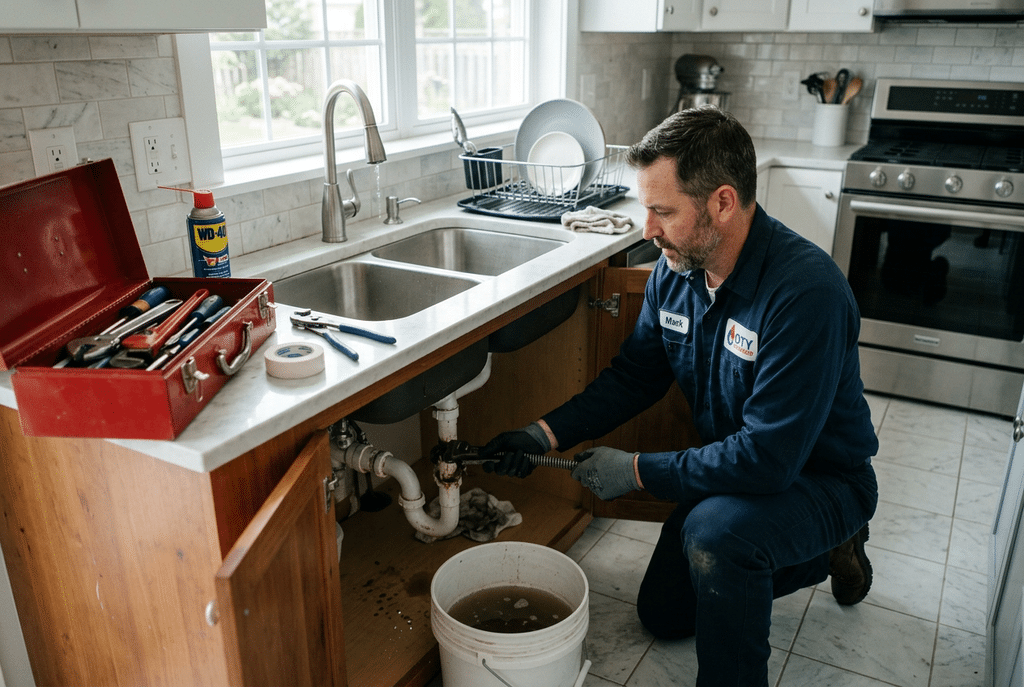
Avoid chemical drain cleaners, especially when water is standing in the sink. If both bowls fill with wastewater, you notice leaks beneath the cabinet, or the blockage keeps returning, arrange professional service. A plumber can determine whether the problem is in the sink trap, connecting pipe, or a deeper section of the drain line.
You may not need professional cleaning if removing visible debris restores normal drainage completely. However, repeated clogs or backups affecting multiple fixtures warrant further investigation.
Frequently Asked Questions
Can a Kitchen Sink Clog Affect Your Dishwasher?
Yes. Many dishwashers discharge wastewater through plumbing connected to the kitchen sink drain. If that drain is blocked, water may back up into the sink or dishwasher. Stop the dishwasher if drainage problems develop, and have the shared drain checked before running another cycle.
Why Does My Kitchen Sink Smell Bad Before a Backup?
An unpleasant odor may come from decomposing food trapped in the strainer, disposal, or drain, although a plumbing issue can also cause persistent smells. Clean accessible components and remove visible debris. If the odor continues despite cleaning, a plumber can investigate the drain and its connections.
Can I Use a Drain Snake on a Double Kitchen Sink?
A drain snake may clear some accessible clogs, but using the wrong tool or technique can damage pipes or disposal components. If you’re unfamiliar with your plumbing layout, avoid forcing a snake into the drain. Persistent blockages are better assessed by a professional.
Does Homeowners Insurance Cover a Kitchen Sink Backup?
Coverage depends on your policy, the cause of the backup, and any applicable exclusions or endorsements. Gradual maintenance issues may be treated differently from certain sudden water damage events. Review your policy and contact your insurer if a backup causes property damage.
What Should I Do if My Kitchen Sink Overflows During Thanksgiving?
Turn off the faucet, garbage disposal, and dishwasher right away. Keep people away from standing wastewater, especially if it may be contaminated, and protect nearby belongings if you can do so safely. If water keeps rising or leaks threaten your cabinets and flooring, call an emergency plumber promptly.
Can Cold Weather Make Kitchen Sink Clogs Worse?
It can. Cooking grease cools and hardens faster in cold pipes, especially drain lines that run along exterior walls or through unheated spaces. Running hot water after washing greasy dishes only moves the fat further down the line, where it solidifies again, so wiping pans and putting grease in the trash matters even more once temperatures drop.
Prepare Your Long Island Kitchen for Thanksgiving
Most double-sink backups start small, with a slow drain or a little water rising in the opposite bowl. Keeping grease and scraps out of the sink and dealing with early symptoms before the holiday makes a full blockage on Thanksgiving Day much less likely.
All Island Plumbing, Heating & Cooling helps homeowners across Nassau and Suffolk counties clear stubborn kitchen clogs before they become holiday emergencies. A licensed technician can find whether the blockage sits in the trap, the shared connection, or further down the line, explain the cost before any work begins, and respond around the clock if your sink overflows in the middle of the celebration.
If you’re dealing with a kitchen sink backing up into other side, don’t wait until the turkey is in the oven to get it checked.